Let’s face it – you wouldn’t leave your wallet on a table while queuing for a cup of coffee in your local Costa™️. Likewise, you’d probably quit the queue and dash back to grab your phone if you left it on the table unlocked.
These days most people fail to comprehend that our physical space and cyber space are interlinked; they’re not separate.
As technology has changed over time, the way we protect our personal information and secure our valuables has changed. But the methods criminals use are essentially no different from those they’ve used for centuries. As we start to take all our valuables from the physical space to cyberspace the criminals simply follow the loot.
If you take a look at the map and trail of a fibre optics cable you can understand how the latter-day cyber pirates operate. Data travels the same route and so do the criminals; most end users fail to appreciate that when they’re logging onto the coffee shop’s WiFi network – or using a freebie network in the airspace around them.
Cybercriminals simply use a port sniffer search engine to find all the routers in the locale. This tells the hacker who has a default password of “admin,” which is essentially the equivalent of leaving your wallet on the table in the coffee shop.
A lot of equipment used in the last couple of decades sits on networks that were never designed to be on the open internet. Now that they’re plugged into routers and the legacy systems, they are sitting ducks for hackers. Think about that next time you decide to have coffee and cake on the high street.
If you could have a “cyber bodyguard” with you whenever you were out and about, that would change the game completely.
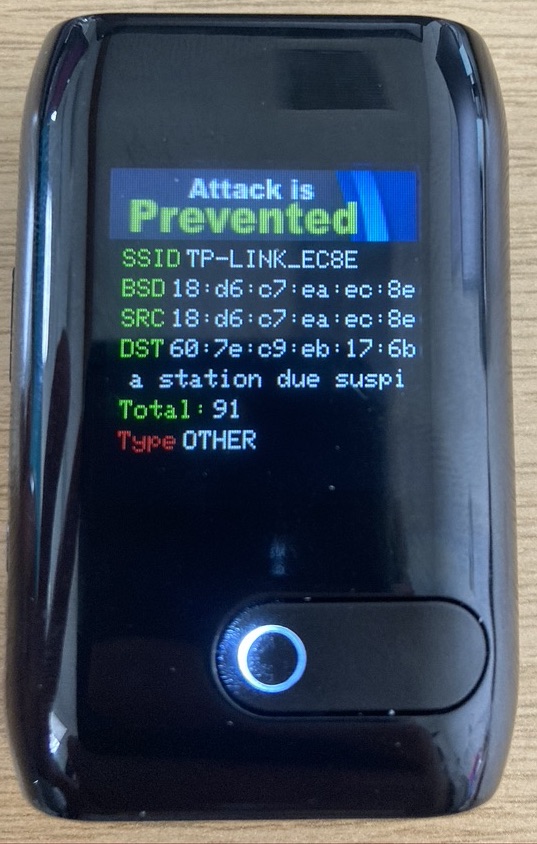
The cyber bodyguard, known as the Traveler™️ could take care of any attacks on your smartphone, laptop or tablet by identifying (intrusion detection) and stopping the attack (intrusion prevention) in its tracks.
The device is the size of a car key-fob and is battery powered for mobility and ease of use. Central IT or your service provider can view the airspace around your Traveler™️ to forensically investigate any serious incidents, should they need to.
The device sends any information to, and receives updates from the management console when it connects to its designated home WiFi network.